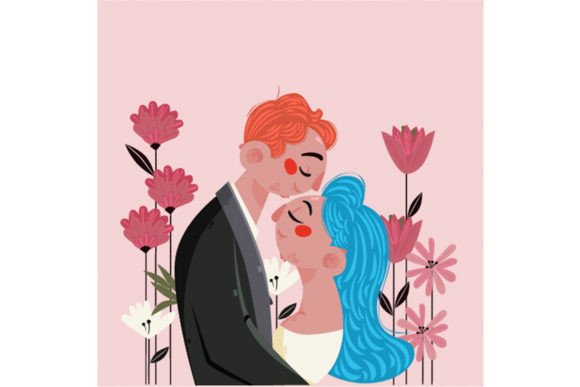
Hand Drawn Wedding Couple Illustration: Beyond the Typeface
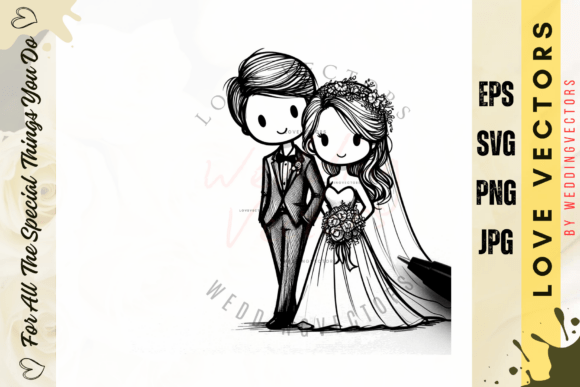
When we talk about design assets for weddings, we often jump straight to typography—choosing the perfect script font or elegant serif font. But there is a specific visual element that carries just as much weight: the Hand Drawn Wedding Couple Illustration. If you are looking at the file package included here—AI (CS6), EPS10, and a high-res Image—you aren't just getting a doodle; you are getting a versatile vector asset that serves as a cornerstone for modern typography layouts and branding. This illustration captures the intimacy of a wedding couple with a distinct, hand-drawn aesthetic that feels personal and human, rather than mass-produced.
The Anatomy of the Illustration: Style and Personality
Let’s break down what makes this specific Hand Drawn Wedding Couple Illustration work from a design perspective. First, notice the line work. It isn’t rigid or geometric. It possesses that organic "wobble" characteristic of high-quality handwritten art. This lack of robotic perfection is actually its greatest strength; it signals authenticity to the viewer. The style strikes a balance between modern minimalism and classic romanticism, making it a flexible companion for various design assets.
The personality of this illustration is soft, romantic, and approachable. It avoids the stiffness of stock photography. Whether the figures are shown in a classic embrace or a whimsical pose, the illustration adds a layer of storytelling to your project. It acts as a visual anchor. In the context of a broader layout, this kind of image creates an emotional focal point that draws the eye before the text even registers. For a designer, having access to the AI and EPS10 files means you aren't stuck with a static image. You can manipulate the paths, adjust stroke weights, or change colors to match a specific brand identity without losing the integrity of the hand-drawn style.
Strategic Applications: Where This Asset Fits Best
You might be wondering where a Hand Drawn Wedding Couple Illustration fits into your workflow. The applications are broader than just wedding invitations, though that is the obvious starting point. For graphic designers and stationery creators, this is a premium font companion. Imagine pairing this illustration with a delicate script font for a wedding suite. The illustration softens the layout, giving the typography room to breathe.
Branding and Packaging Design
Outside of the wedding industry, this style of illustration is trending heavily in branding. If you are a small business owner in the lifestyle, beauty, or wellness sector, this asset can humanize your brand identity. Think about packaging design for a boutique candle company or a skincare line. Placing a subtle, single-color version of this illustration on a box flap or a label adds a touch of artisanal quality. It tells your customer that there is a human element behind the product.
Digital Presence and Content Creation
For bloggers and content creators, the included Image file is a lifesaver for social media graphics. It works beautifully as a background element for Instagram quotes or a header image for a blog post about relationships. Because it is a clean illustration, it doesn't compete with your text overlay, provided you manage the opacity or color contrast correctly. It’s a versatile piece of creative font—well, creative asset—that elevates a standard social feed into a curated gallery.
Technical Integration and Font Pairing
One of the most common questions regarding design assets like this is how to integrate them with typography. A Hand Drawn Wedding Couple Illustration usually pairs best with fonts that don't try too hard to mimic handwriting. If you pair a sketchy illustration with a messy, chaotic handwritten font, the result often looks cluttered and unreadable.
Instead, look for contrast. A clean sans serif font offers a modern, editorial design look that allows the illustration to be the "artistic" element of the layout. Alternatively, a structured serif font can provide a classic, editorial hierarchy that grounds the whimsical nature of the drawing. If you must use a script font, choose one with smooth, connecting strokes rather than a rough, scratchy texture. The goal is visual hierarchy: the illustration provides the mood, and the typography delivers the message.
Evaluating the Files: AI, EPS, and Image
Understanding the file formats included is crucial for a smooth workflow. The AI (CS6) file is your master file. It allows for full scalability and color manipulation in Adobe Illustrator. This is essential if you are integrating the illustration into a complex logo design or a large-format print job where vector precision is non-negotiable.
The EPS10 format acts as your safety net for compatibility. While AI files are specific to Adobe, EPS (Encapsulated PostScript) is the industry standard for vector exchange. It ensures that whether you are using CorelDRAW, Affinity Designer, or older legacy software, you can still access the vector paths. Finally, the Image file (likely a PNG or JPG) is for quick implementation. It’s ready for web design or social media where you don't need to edit the lines, just place the element.
Practical Considerations for Commercial Use
Before you finalize your project, you need to evaluate the fit and licensing. Even the best visual asset fails if it doesn't align with the project's tone. A Hand Drawn Wedding Couple Illustration is intimate and romantic; it probably isn't the right choice for a corporate finance report or a heavy industrial brand. Context is everything.
When testing the asset, print it out. View it on a mobile screen. Check how the lines render at small sizes. Sometimes, intricate hand-drawn details can turn muddy if scaled down too small for a business card or a favicon. You may need to simplify the image or thicken the strokes in Illustrator to ensure readability.
Finally, always respect the licensing. If this is a commercial font/asset, ensure your usage aligns with the terms. Are you creating an end product for a client? Are you selling the illustration as part of a template? Clarifying these details protects your business and respects the original creator's work. By treating this illustration not just as a picture, but as a strategic component of your design system, you maximize its value and create a more cohesive, professional result.